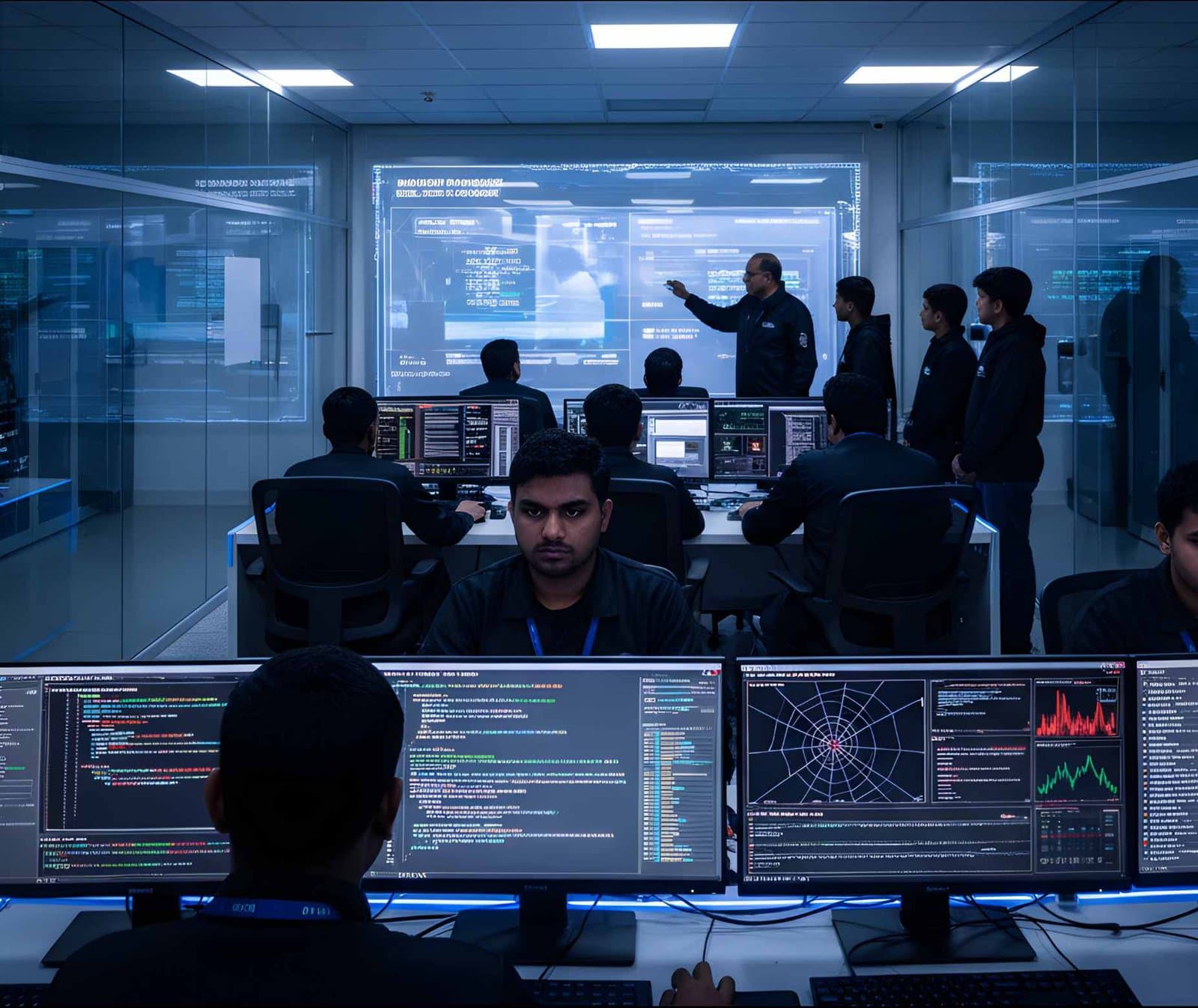
 MalwareIncident Response & Malware AnalysisRansomware & Threat ResponseHandle a ransomware attack from first call to recovery, reporting and lessons learnt.
Corporate Training in Digital Forensics
Training planned around your team, your cases and your systems. We cover incident response, malware, mobile and disk forensics and evidence handling, at your office, online or in our labs.
Built for the cases your team faces
A bank's fraud desk, a state cyber cell and a software company's security team need different things from forensics training. So we start by asking what lands on your desk. Data leaks by employees, phishing that led to a breach, ransomware on file servers, disputes over deleted mail.
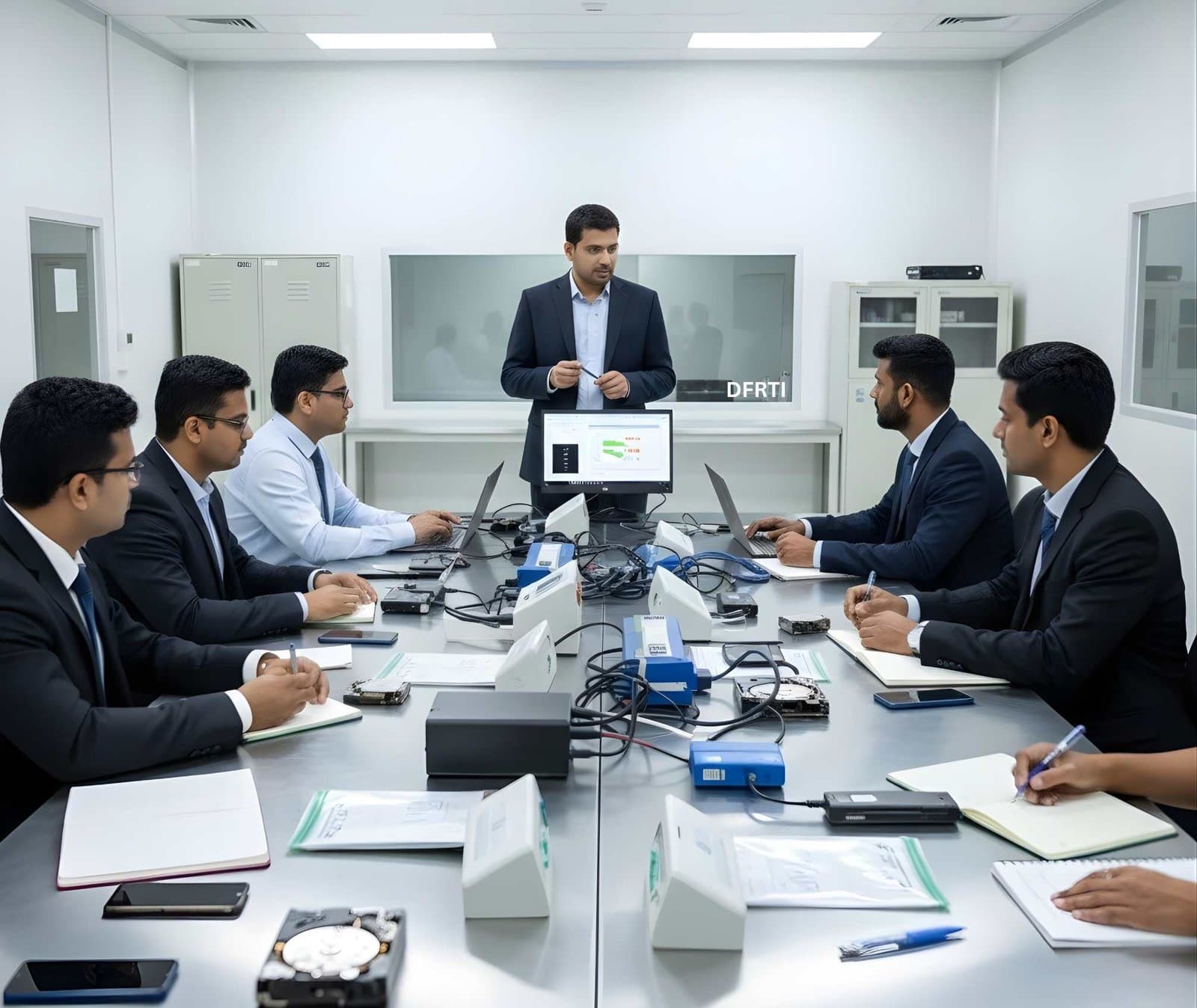
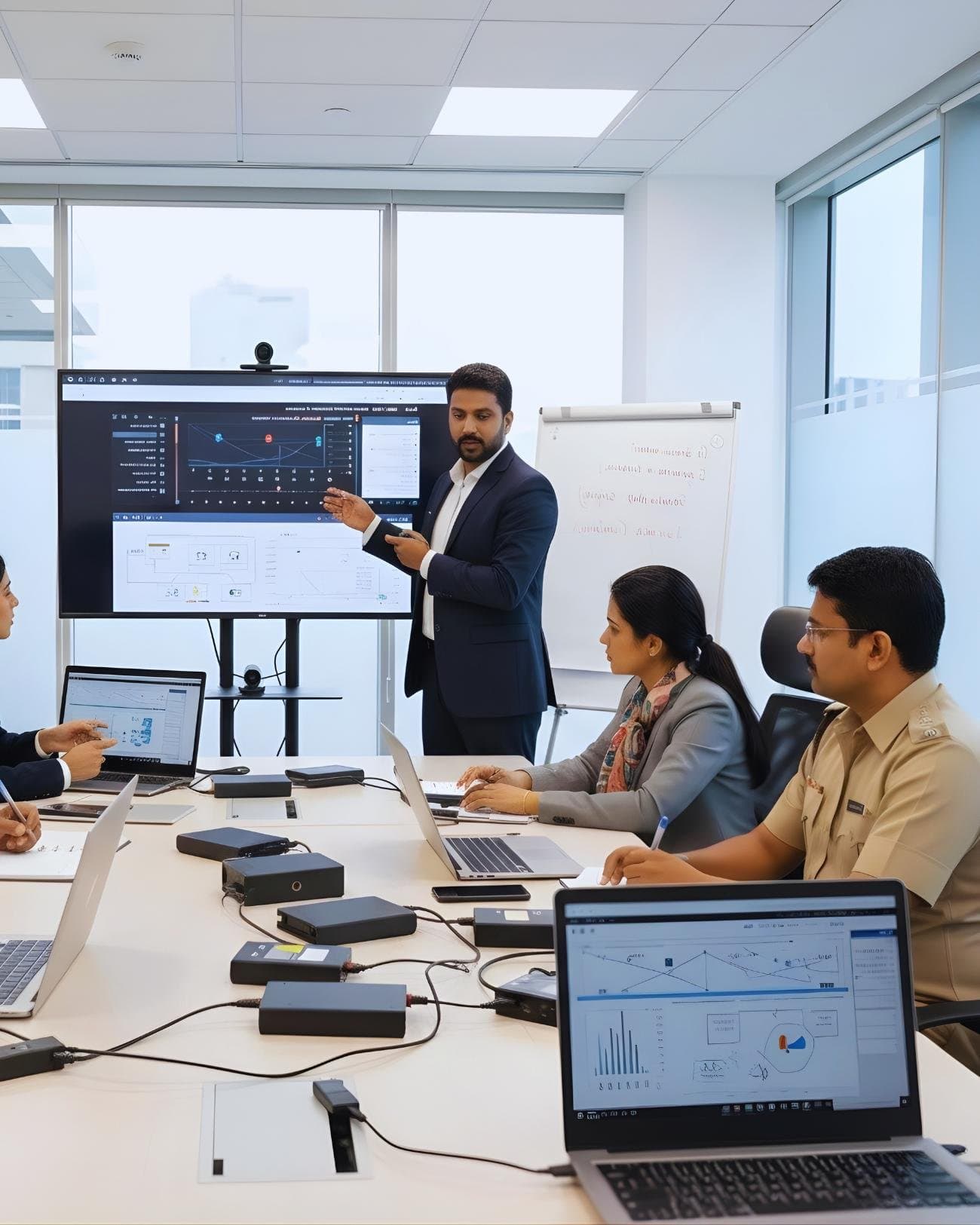
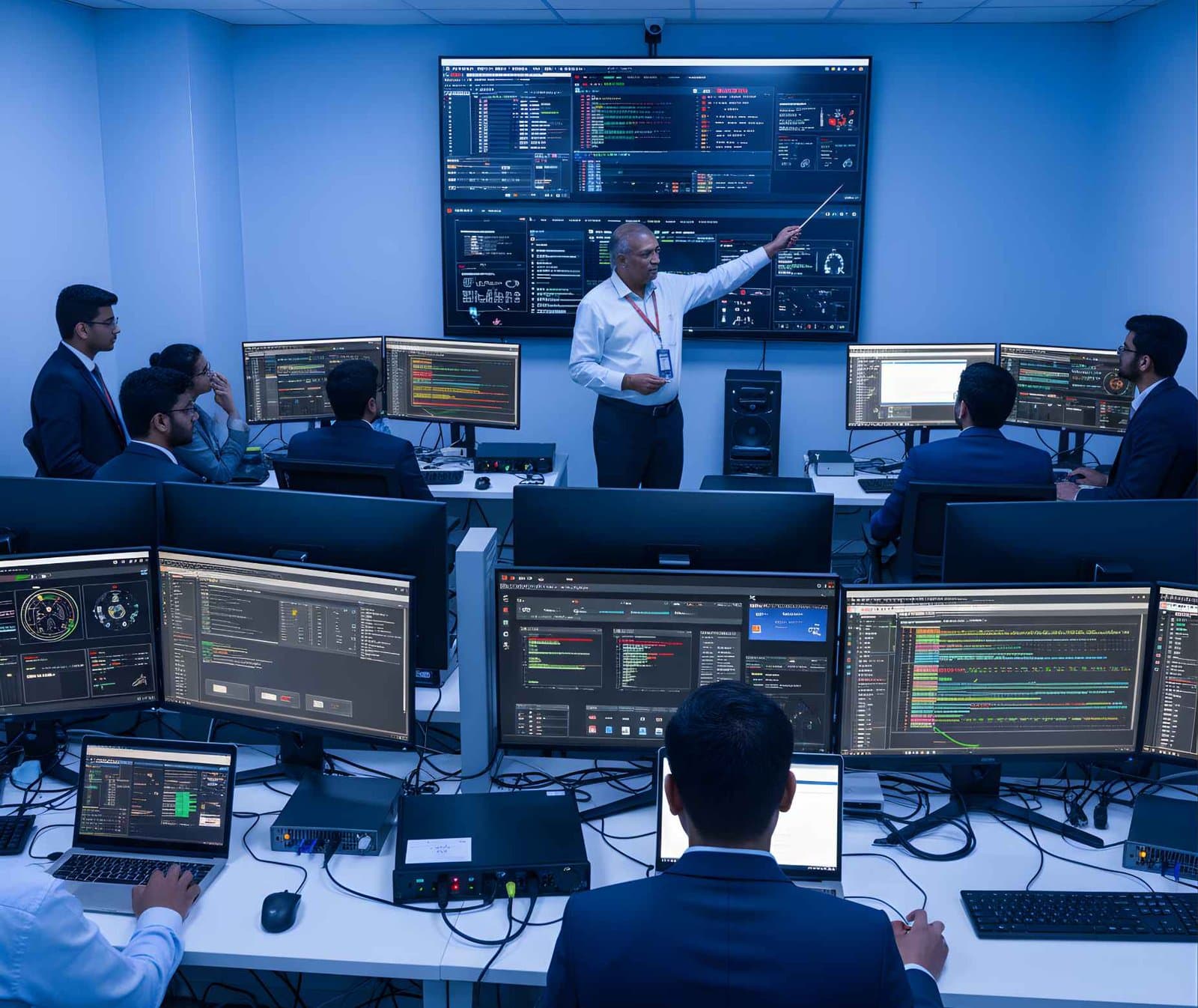
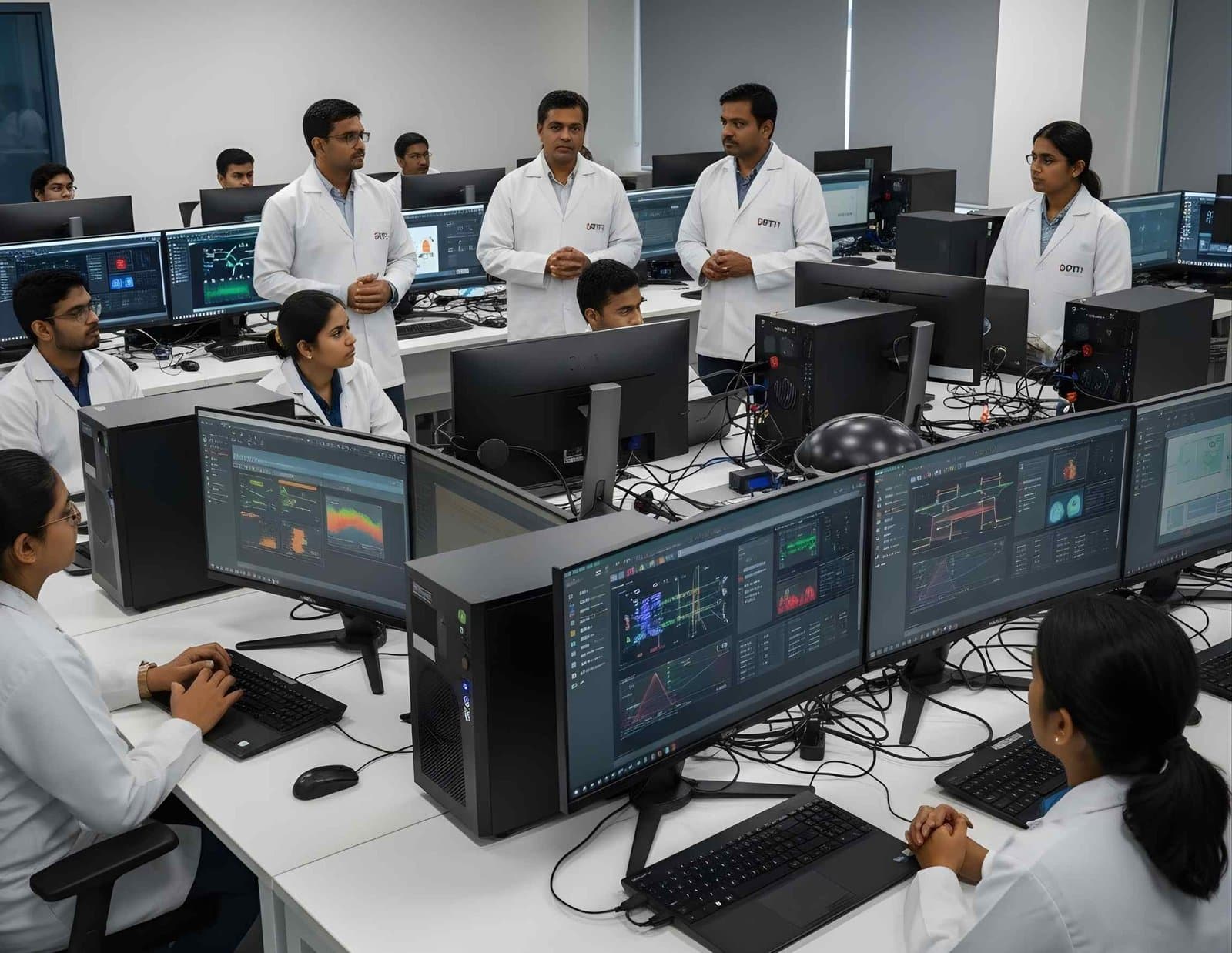
From there we build a programme that mixes classroom work with labs on scenarios close to your own. Trainers are certified forensic professionals with experience in corporate, government and law enforcement cases. The aim is a team that can handle the first hours of an incident properly and knows when to call in outside help.
- Practical exercises in evidence analysis and incident response
- Programmes tailored to your sector and risks
- Coverage of AI-assisted analysis and network threats
- DFRTI certification for your staff
What your team will learn
Every programme is customised. These are the areas we most often cover.
- Digital storage forensics
Imaging laptops and servers, file system analysis and recovering deleted data.
- Mobile and IoT forensics
Extracting and reviewing company phones, chat apps and connected devices.
- Network and cloud forensics
Packet analysis, firewall and proxy logs, Microsoft 365 and AWS audit trails.
- Malware and incident response
Memory capture, triage of infected hosts and ransomware response.
- Legal and reporting
Chain of custody, report writing and preparing evidence for court or a regulator.
Who should attend
- Law enforcement units, forensic science laboratories and government agencies that run digital investigations
- IT and network teams who maintain systems and are first to see an incident
- Corporate investigation units looking into fraud, IP theft or internal data breaches
- Legal and compliance teams who handle digital evidence and regulatory reporting
How corporate training works
- 01Needs assessment
We study your requirements, team size, sector and investigation priorities, then propose a plan.
- 02Choice of delivery
In-person workshops at your premises or in DFRTI's labs, live online sessions, or a mix of both.
- 03Hands-on learning
Your team works through case scenarios with forensic tools, AI-assisted analysis and lab exercises.
- 04Support and certification
Staff keep access to resources and mentor guidance after the programme and can earn DFRTI certification.
What changes after the training
- Better incident handling
Your team can identify, contain and investigate a breach without destroying the evidence they need.
- Faster analysis
Staff learn where AI and automation help in reviewing large evidence sets, and where a human must check.
- An in-house forensics unit
Build a team that can run routine investigations on its own.
- Evidence that stands up
Workflows that meet court standards, including the Section 63 certificate under the Bharatiya Sakshya Adhiniyam, 2023.
- Regulatory readiness
Response plans that account for CERT-In's six-hour incident reporting and breach duties under the DPDP Act, 2023.
Common questions
Can you train at our office?
Yes. We can train onsite, online or in a blended format. Some hardware labs work better in DFRTI's own lab.
Can the course use our own scenarios?
Yes. We can build exercises around the types of incidents your team sees, using prepared data rather than your live systems.
How do we start?
Ask for a training proposal through care@dfrti.com or call +91 85277 09690. We will set up a short call to understand your needs.
Related courses
MalwareIncident Response & Malware AnalysisRansomware & Threat ResponseHandle a ransomware attack from first call to recovery, reporting and lessons learnt.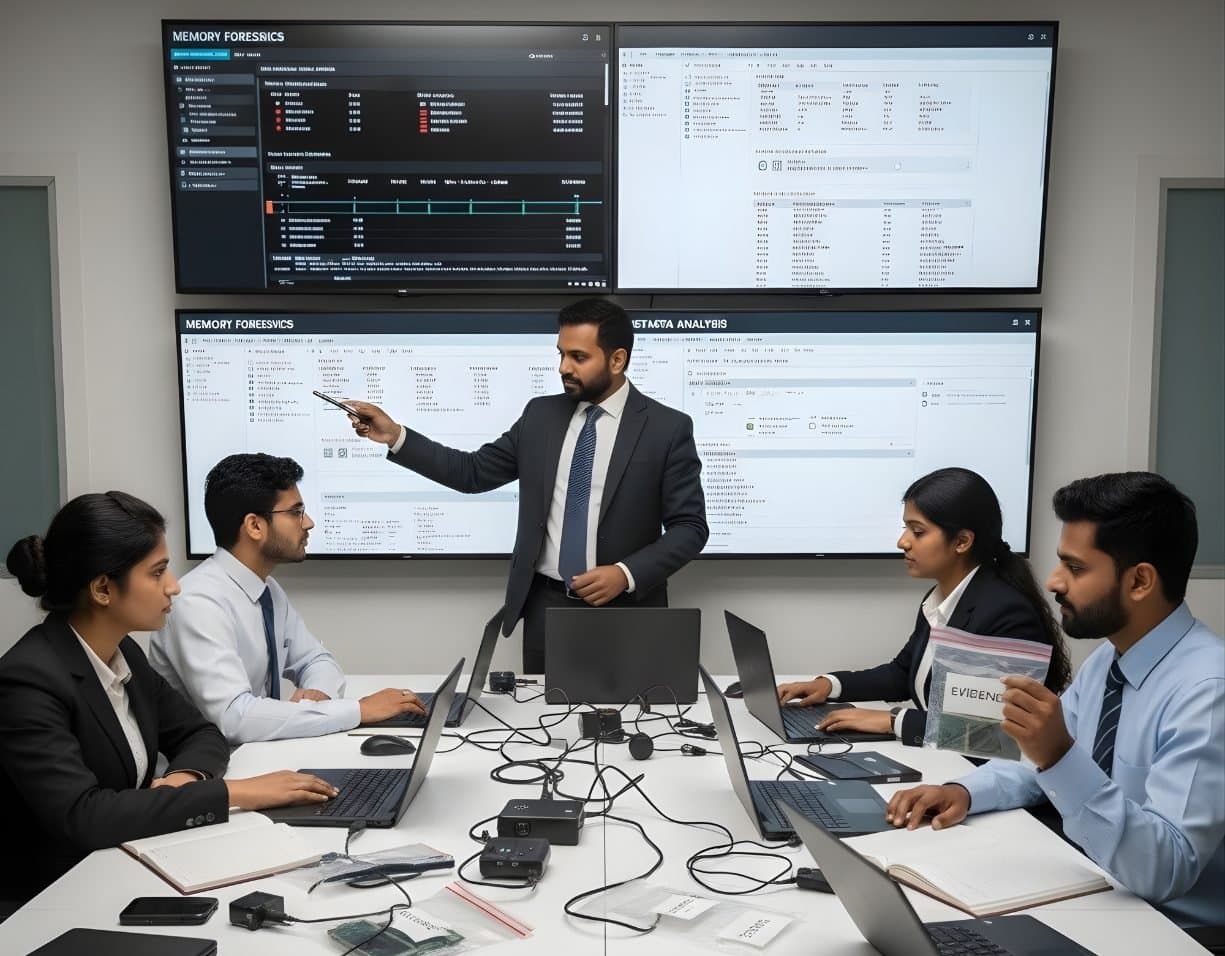 MalwareIncident Response & Malware AnalysisMemory ForensicsCapture RAM and use Volatility 3 to find hidden processes, injected code and connections.
 NetworkNetwork & Cloud ForensicsNetwork Traffic AnalysisRead flows, logs and packets to trace intrusions, beaconing and data theft.
 NetworkNetwork & Cloud ForensicsCloud Storage InvestigationCollect and read AWS, Microsoft 365 and Google Workspace logs as sound evidence.
 AdvancedAdvanced & Specialised ForensicsAI / Machine Learning ForensicsUse machine learning to sort large evidence sets and investigate AI systems
 LegalFoundation & Legal CoursesLegal & Court ProceduresIndian law on electronic evidence: BSA Section 63, BNSS search and seizure and the IT Act.
Not sure this is the right one for you?
Tell us your background and what you want to do next. A counsellor will suggest a course and the next batch.