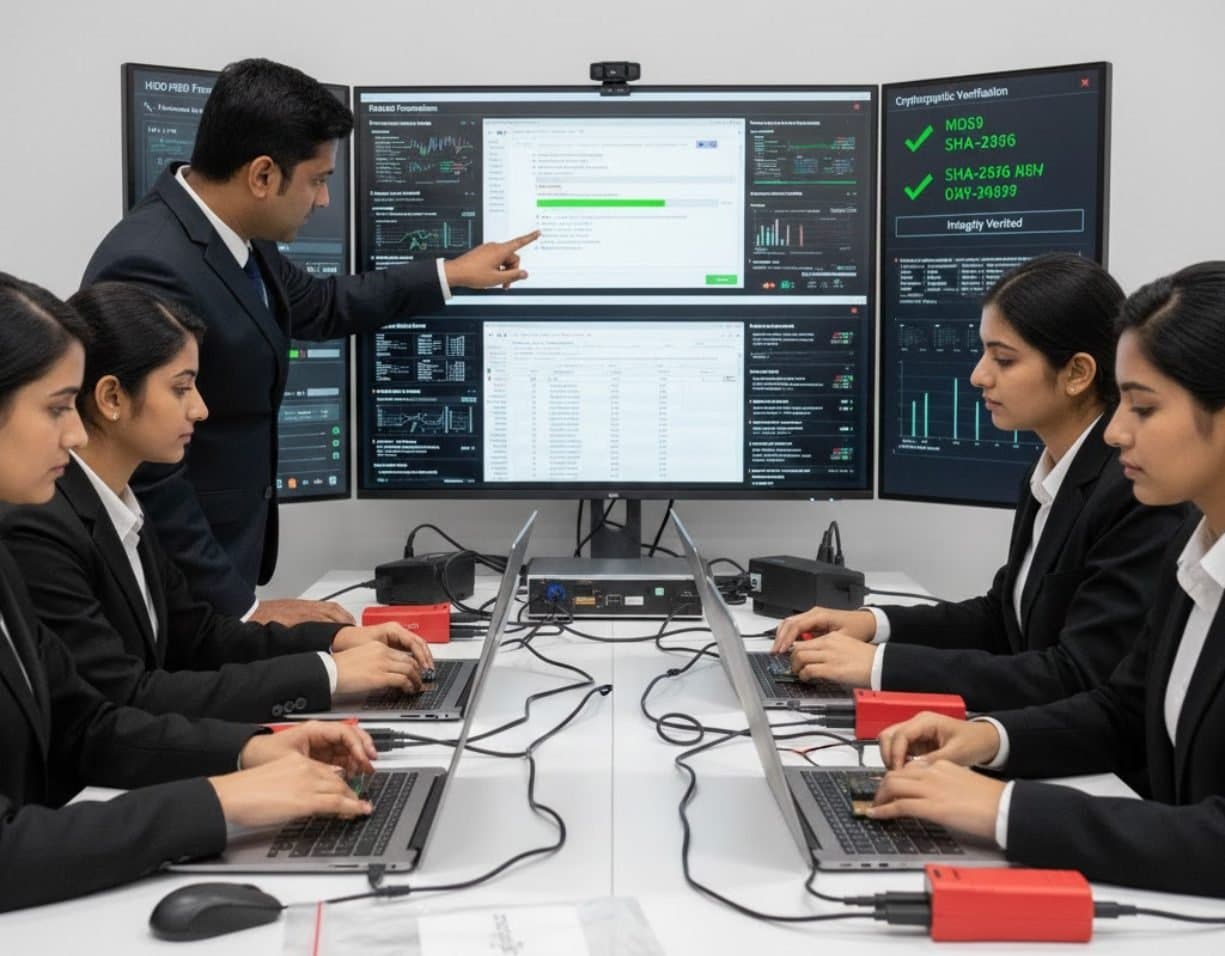
 StorageDigital Storage ForensicsUSB / Pen Drive ForensicsExamine pen drives and memory sticks and prove which USB device touched which computer.
Digital Forensics Workshops & Bootcamps
Short, focused and hands-on. Our workshops and bootcamps teach one skill set at a time, with live evidence and expert trainers, so you can use it at work straight away.
Learn a skill quickly and properly
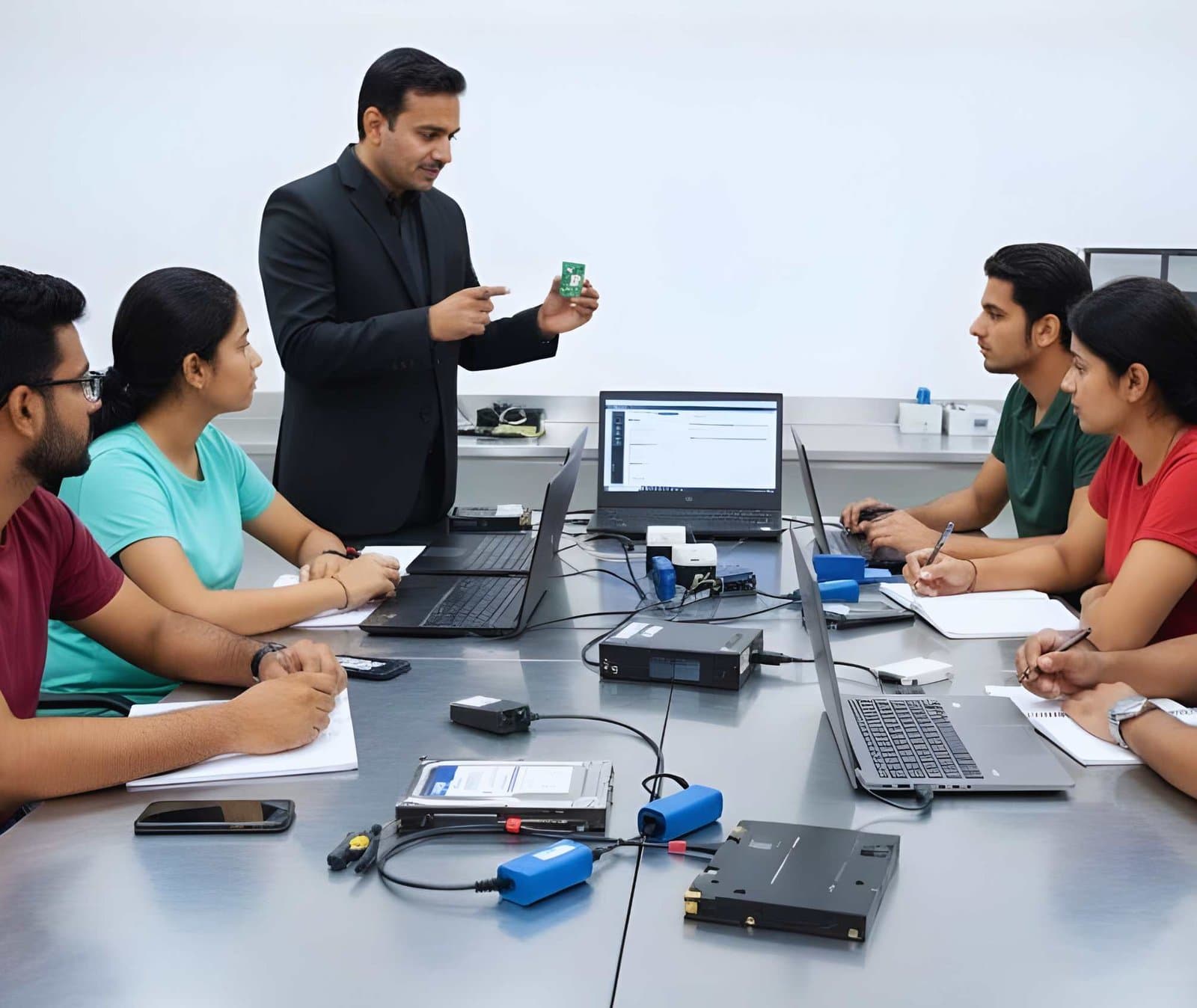
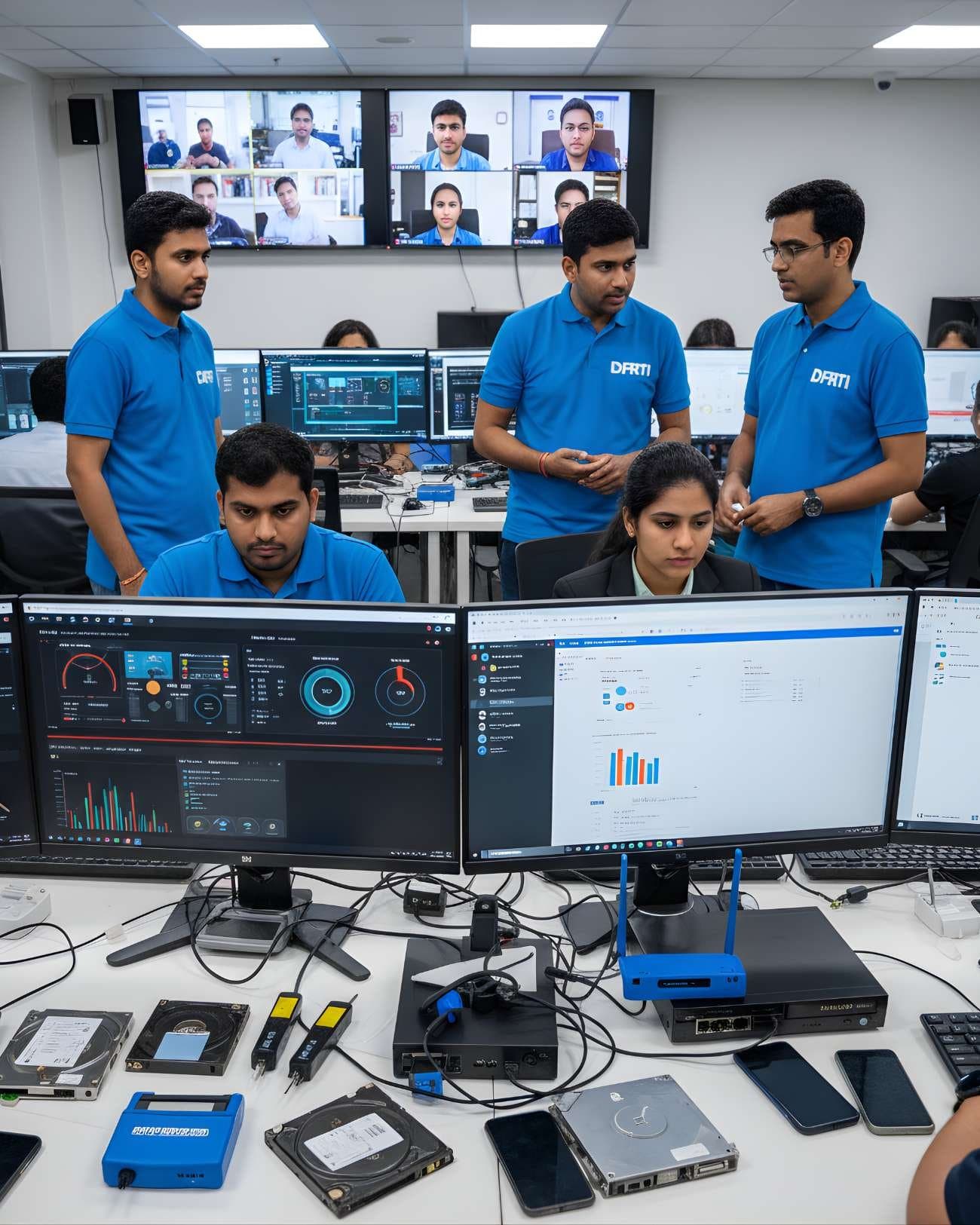
Not everyone can take months off for a full course. A workshop takes one topic, such as phone extraction, recovering a deleted partition or reading a packet capture after a breach, and works through it with real evidence until you can do it yourself.
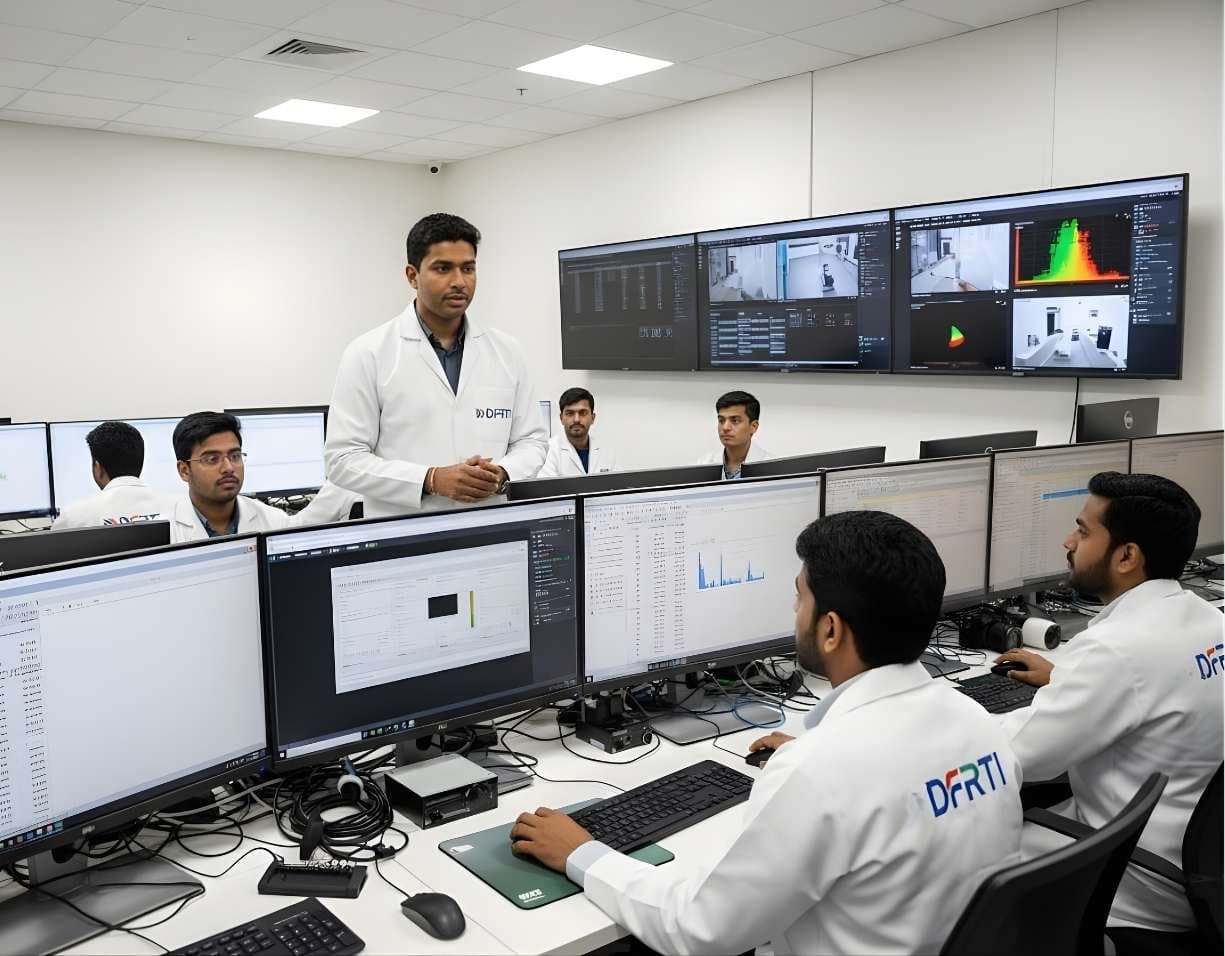
Bootcamps go further. They string several skills together into an investigation, so you practise moving from acquisition to analysis to report under some time pressure, much like the first days of a real case.
- Real case studies and authentic evidence
- AI-assisted tools to speed up review
- Focused training in mobile forensics, data recovery and threat analysis
- Sessions designed for IT teams, investigators and police units
Why join a workshop or bootcamp
- Short and intensive
A condensed format that covers the essentials of one area without filler.
- Expert trainers
Specialists in mobile forensics, incident response and evidence handling run each session.
- Practical from the first hour
Live data, virtual labs and forensic tools, not slides.
- In person or online
Attend at DFRTI or join online, depending on the format of each event.
- Certificate on completion
Earn a DFRTI certificate in the area you trained in.
Topics we run
Workshops and bootcamps are drawn from all our tracks.
- Storage and data recovery
HDD, SSD, USB and RAID work, file carving and file system analysis.
- Mobile and IoT
Android and iOS extraction, app artefacts, drones and IoT devices.
- Network and cloud
Wireshark, packet analysis and cloud account investigation.
- Malware and incident response
Memory forensics, reverse engineering basics and ransomware handling.
- Legal and reporting
Evidence handling, report writing and presenting findings in court.
Who should attend
- Police and forensic investigators who need current skills in evidence recovery and analysis
- IT and security staff moving into incident response or malware work
- Network engineers who want to investigate network and cloud incidents
- Lawyers who need to understand how digital evidence is produced and challenged
- Beginners and experienced professionals who want practical skills they can use at once
How it works
- 01Choose a workshop
Pick from the upcoming schedule, or ask us to run a custom session for your group.
- 02Register online
Book your place and choose in-person or online where both are offered.
- 03Train hands-on
Work through live forensic cases and real evidence with the trainer guiding each step.
- 04Get certified
Complete the workshop or bootcamp and receive your DFRTI certificate in that area.
Common questions
How do I find the next workshop?
Call +91 85277 09690 or email care@dfrti.com and we will share the current schedule.
Can you run a workshop for our department?
Yes. Police units, colleges and companies often book a private session on a topic of their choice.
Is a workshop enough to become an examiner?
A workshop builds one skill well. To work as an examiner you need the wider grounding of a full course or certification track.
Related courses
StorageDigital Storage ForensicsUSB / Pen Drive ForensicsExamine pen drives and memory sticks and prove which USB device touched which computer. MobileMobile & IoT ForensicsAndroid ForensicsExtract and examine Android phones, from ADB pulls to WhatsApp databases and ALEAPP reports
 NetworkNetwork & Cloud ForensicsWireshark / Packet CaptureCapture, filter and read packets in Wireshark and tshark to recover what was sent.
 VideoSurveillance & Image / Video ForensicsImage & Video MetadataRead EXIF, XMP, GPS tags and MP4 atoms with ExifTool and know what each field can prove
 AdvancedAdvanced & Specialised ForensicsOSINT / Open Source IntelligenceFind, verify and record public online information in a form a court can check
Not sure this is the right one for you?
Tell us your background and what you want to do next. A counsellor will suggest a course and the next batch.